
What the game is
Cryptarithmetic — the alphametic, the verbal arithmetic — is the puzzle where a sum is written in letters and every letter hides one digit. Same letter, same digit, everywhere. Different letters, different digits. No number may start with zero. Replace the letters and the equation must be arithmetically true; that last clause is the whole game. The genre's calling card is SEND + MORE = MONEY, published by Henry Dudeney in 1924, and the name itself — "cryptarithmie" — was coined by Simon Vatriquant in 1931.
This app's twist is where the puzzles come from. Instead of recycling a fixed riddle list, it generates each one backwards: it invents a real addition first, then swaps the digits for letters. Every board therefore hides at least one honest, correct sum — you are always decoding, never proving a phantom solvable. Note also what this game is not: no grid to fill, no candidates to pencil. It is a single equation; the HUD just names your level, and the letters themselves show the size.
How to play
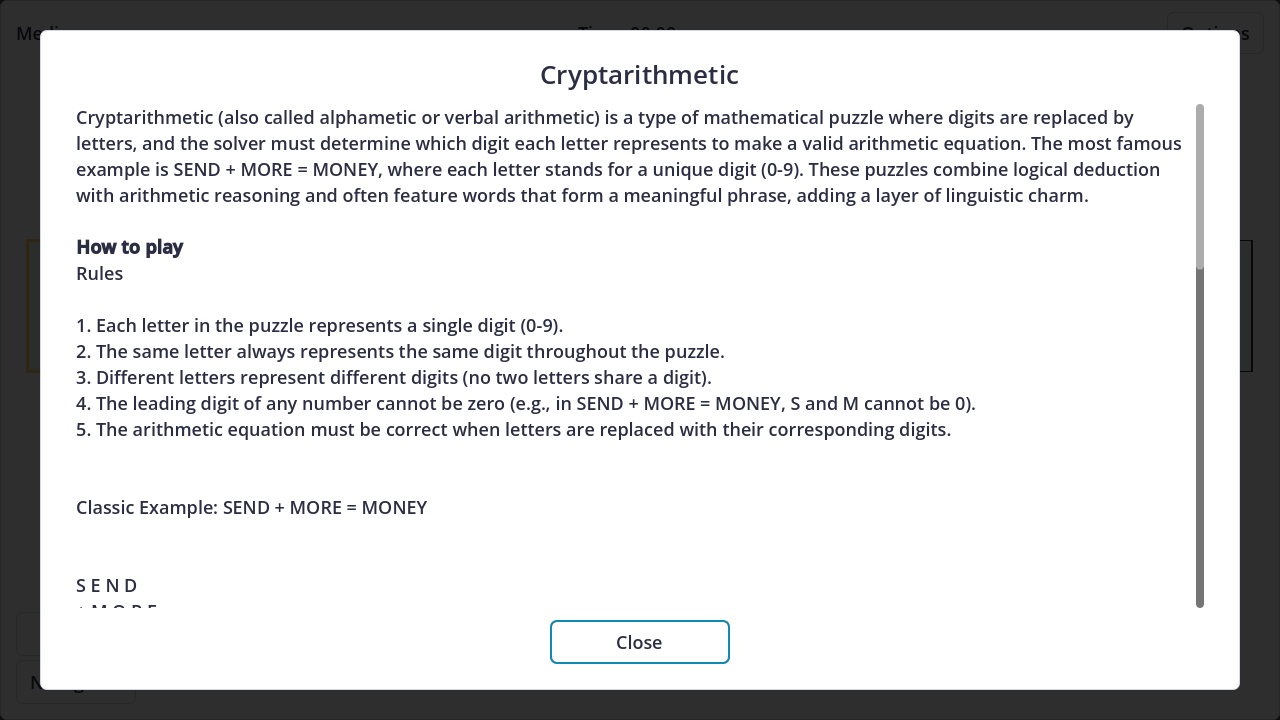
The rules, exactly as the in-game help sheet numbers them (that sheet even cites SEND + MORE = MONEY as its example):
- Each letter stands for a single digit, 0 to 9.
- The same letter always represents the same digit throughout the sum.
- Different letters represent different digits — no sharing.
- The leading letter of any number cannot be zero.
- When every letter is decoded, the addition must be correct.
Step by step. Medium presents two three-digit addends and their result as a row of letter boxes with a dash beneath each, waiting for digits, and the full 0-9 palette unused underneath.
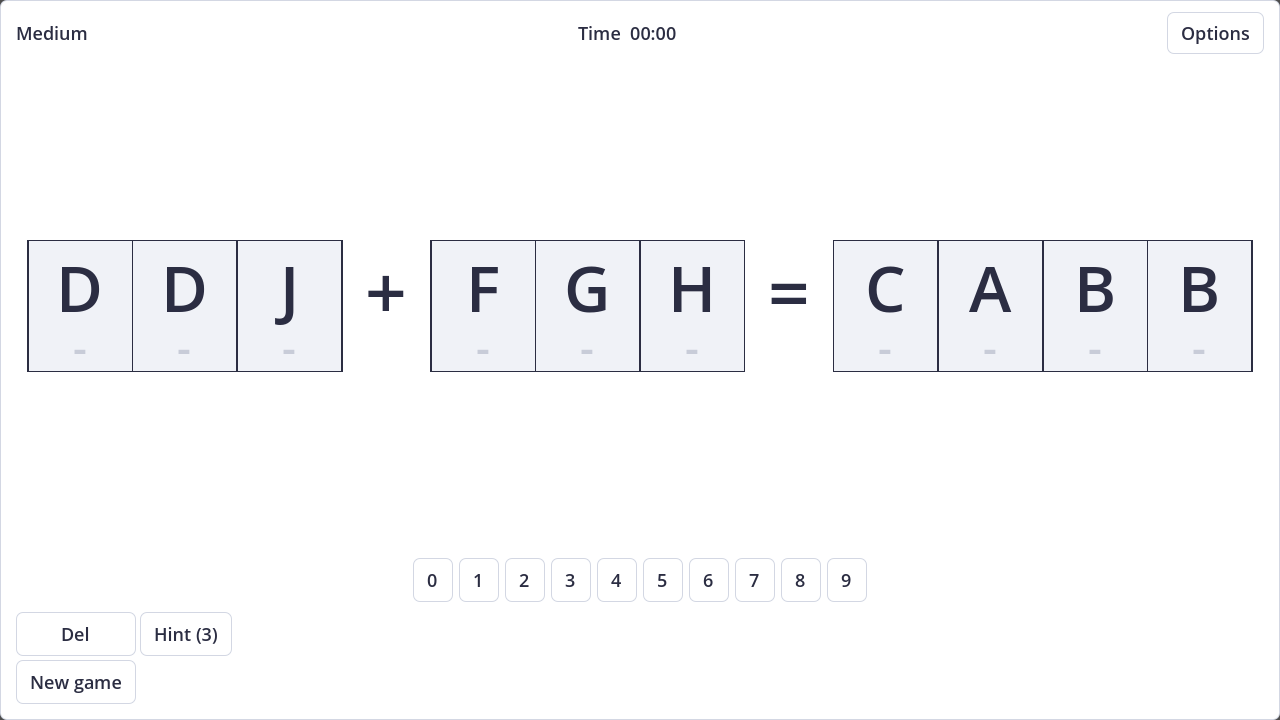
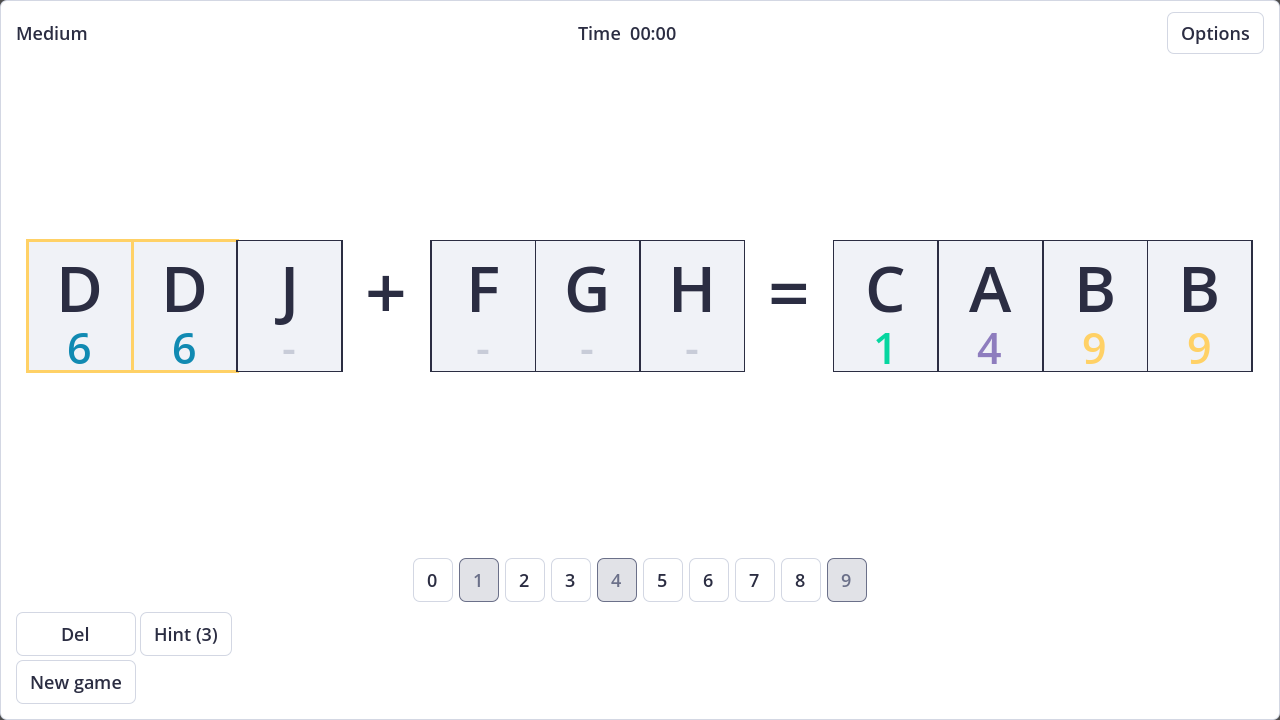
Play is point-and-assign. Tap a letter and its box lights with a colored border; tap a digit on the palette and that digit appears beneath every occurrence of the letter. The palette then grays the digit out — one digit, one letter — and refusing is enforced rather than advised: reusing a taken digit pops "Digit already used", and offering zero to a leading letter pops "The leading digit cannot be zero". Three hints per run, each surgical: the selected letter, or the first still-wrong one, receives its correct digit straight from the hidden sum.
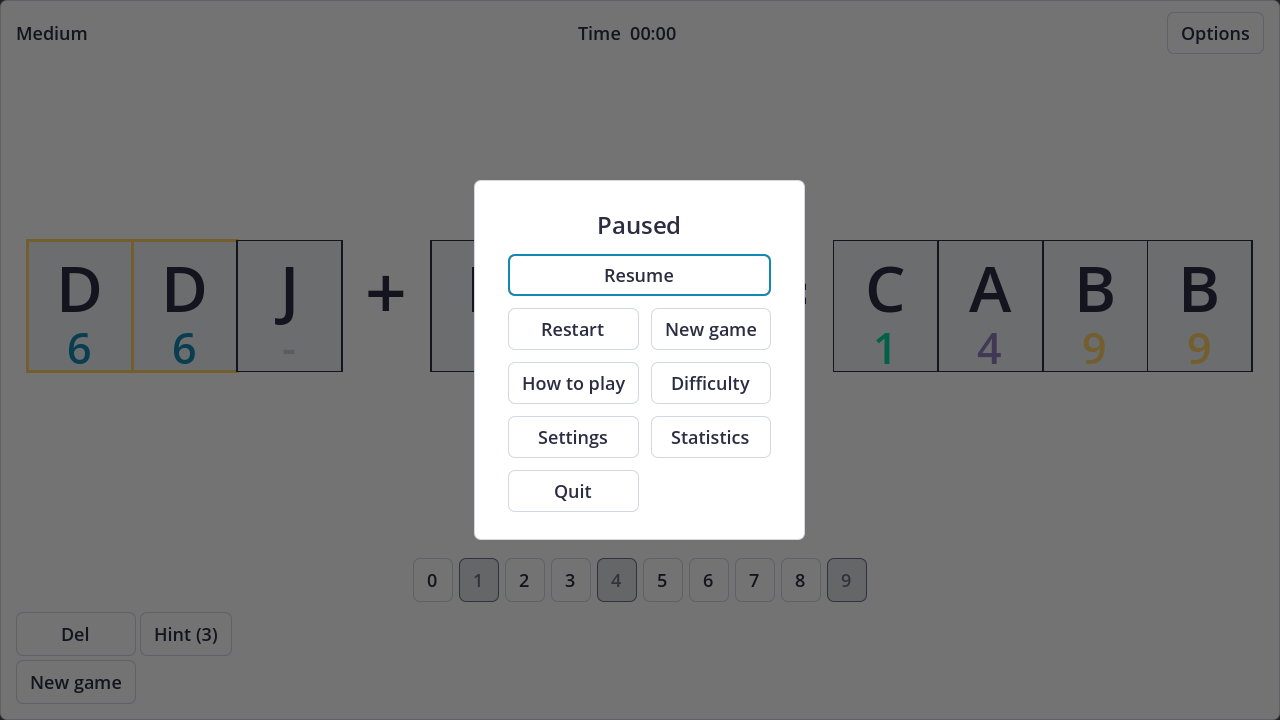
The pause menu is the catalog standard: Resume, Restart, New Game, How to Play, Difficulty, Settings and Statistics — seven options in the browser build; the installed app adds Quit. The help sheet keeps the unique-digit and no-leading-zero rules one tap away.
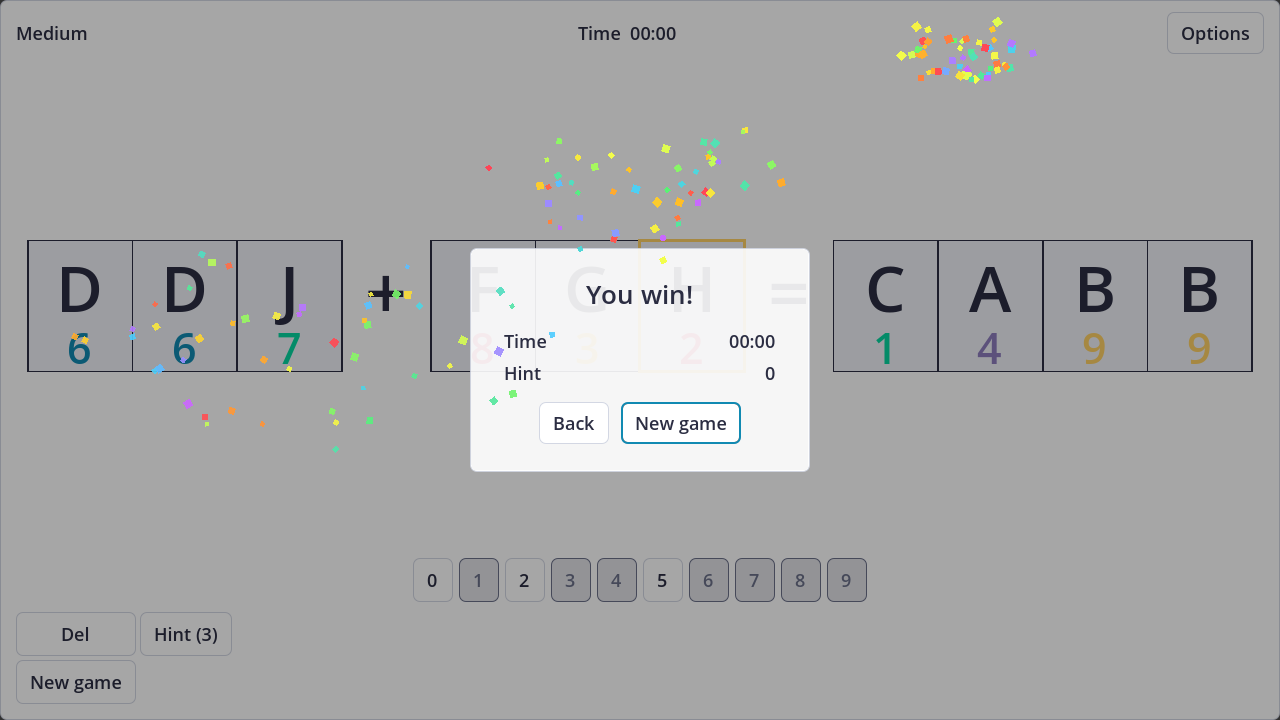
Fill the last letter and the game checks arithmetic, not fullness: only a sum that truly carries and adds wins, panel with time and hints included. The digits in the screenshot spell a valid addition — 667 + 832 = 1499.
Strategy and tips
- Hunt the carry. A result longer than both addends is born from a single overflow — that leading letter is 1, forced, exactly as M = 1 in Dudeney's classic.
- Work one column at a time. The rightmost column fixes the sum's last digit; each column is a small equation that must match its letter and the carry it passes left.
- Start with the busiest letters. A letter appearing in several columns — especially in all three numbers — is squeezed from many directions and usually collapses first.
- Let the palette keep score. Every assignment burns a digit; two or three moves in, most letters have a pair of candidates left, and testing them is cheap because erasing is free.
- Try, contradict, erase. Assign a guess, follow it one column deep, hit Backspace at the clash. Alphametics yield to disciplined trial as much as to inspiration.
Controls
- Mouse and touch: tap a letter to select it, tap a palette digit to assign; the Del button clears the selected letter. Buttons for Hint and the pause menu.
- Keyboard: the real shortcut here — type digits 0–9 to assign to the selected letter; with nothing selected it takes the first undecoded letter and jumps to the next open one after every digit, so the whole sum can be solved without touching the mouse. Backspace clears a letter.
- Gamepad: the D-pad walks a cursor over the letter boxes and A taps one, exactly like a finger; the digit palette is a row of ordinary focusable buttons, reached with standard focus navigation and pressed with A/Enter.
- There is no undo button — the eraser is Del or Backspace, one press per wrong digit.
Difficulties and variants
Difficulty here means equation size, not board size. Easy sums two two-digit numbers (at least four different letters); Medium and Hard go three-digit with a minimum of six and seven letters; Expert keeps three-digit addends but demands the result gain an extra digit — a carry in every deal — and at least nine letters, which nearly exhausts the ten-digit alphabet. Three hints at every level. Changing difficulty discards the run and generates a fresh sum; Restart replays the same one. The wider genre stretches to subtraction and multiplication alphametics — this app stays with the pure addition form.
Where to play
Cryptarithmetic is free in the Tab and Blank catalog, in the browser, nothing to install: play Cryptarithmetic.
If making digits obey one equation felt good, the number shelf next door keeps Sudoku — the same bookkeeping discipline, spread across a grid.