
The instruction booklet of the 32nd World Puzzle Championship opens the scoring of its individual rounds with a flat sentence: "There is a unique solution for each puzzle". One answer, and only one — because once two valid fills score the same, a world final stops measuring logic and starts measuring tie-breaking luck. Our title promises that for our catalog, so honesty comes first: not every generator here verifies uniqueness. What the workshop runs are several honest takes on the rule — counting, carving, building, plain rulebooks — plus one dial with nothing to do with solutions: difficulty. Messier than the promise, and worth reading.
The engine that counts: Thermometers
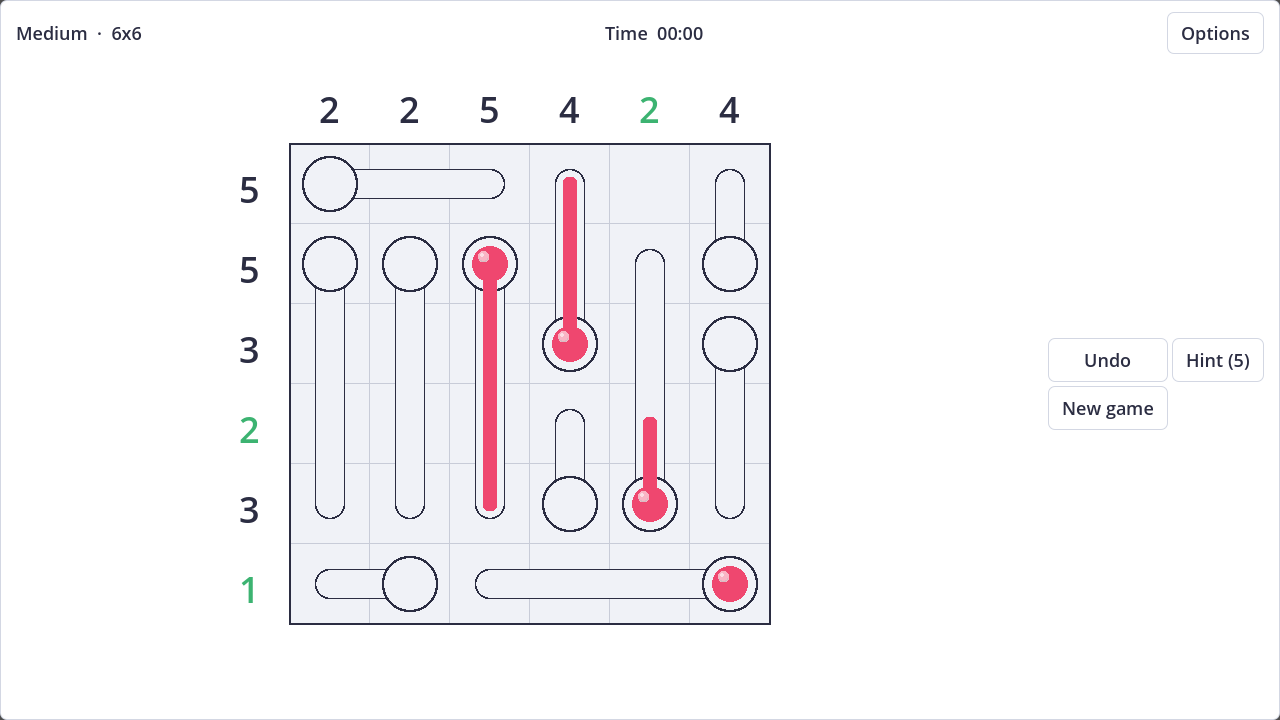
Thermometers is the catalog's control freak. Fill the thermometer shapes from their bulbs; match the row and column counts exactly. The generator packs the shapes, derives the clues from a random fill — then does the expensive part: it counts how many fills the clues actually allow. The search stops the moment it finds a second one; a board is accepted only while the counter answers "one".
That check runs on a budget: 600 milliseconds. If no unique board appears inside the budget, the generator ships the valid board it had kept as a fallback — and the code says why: the win condition checks your board against the clues, never against the stored solution, so a board with several solutions stays playable. Any of them wins. Uniqueness is the goal; the clues are the law.
The engine that shapes: Nurikabe
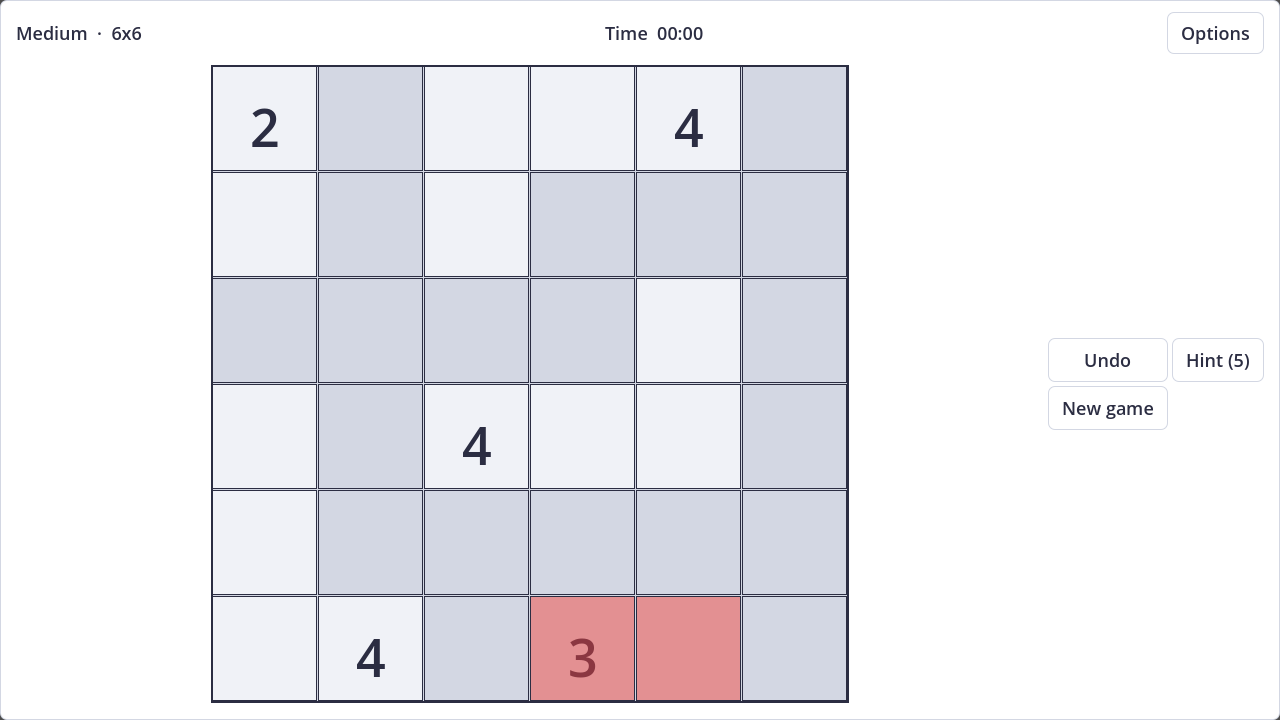
Nurikabe never counts solutions at all. It builds, and it builds well: numbered seeds, islands grown outward ring by ring, and a candidate board thrown out if the sea ends up in pieces or hides a 2×2 block of water. Reject, retry — up to 400 attempts before the generator gives up on that draw.
What this guarantees is a board in good form: islands that can reach their sizes, a sea that behaves. Well-formed, though, is not the same as unique — Nurikabe does not claim to have proven the route is the only one.
The engine that carves: Sudoku
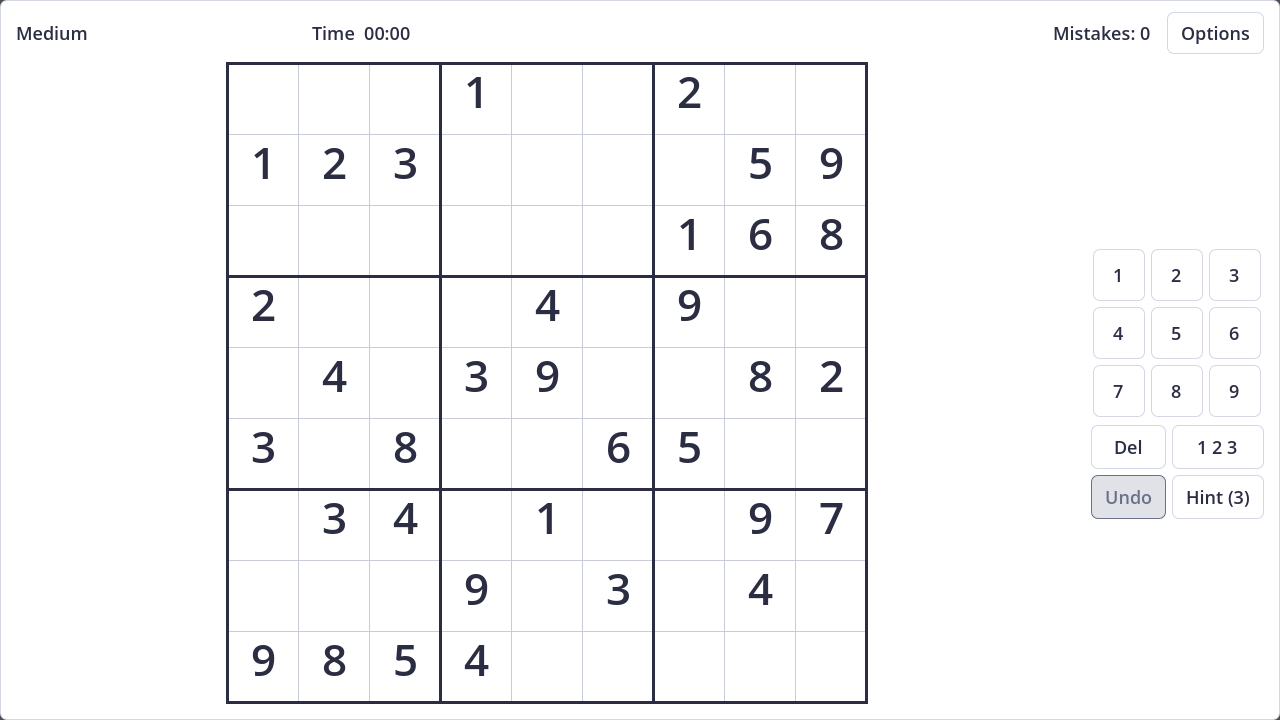
Sudoku works the other way round: build a full, valid grid, then chip away at it. Cells are emptied in random order, and after every removal the grid is quietly re-tested for completions — a check allowed to stop at two. If the answer stops being "one", the clue goes straight back in; otherwise the hole stays. The carving stops at a target number of clues — 45 on Easy, 34 on Medium, 28 on Hard, 24 on Expert.
So uniqueness is verified here: the surviving clues admit exactly one completion. The same code keeps a sober note next to the numbers — fewer clues does not automatically mean harder; it is simply the practical lever. The published Sudoku manual states the same figures.
The difficulty that lives in an opponent: Hex
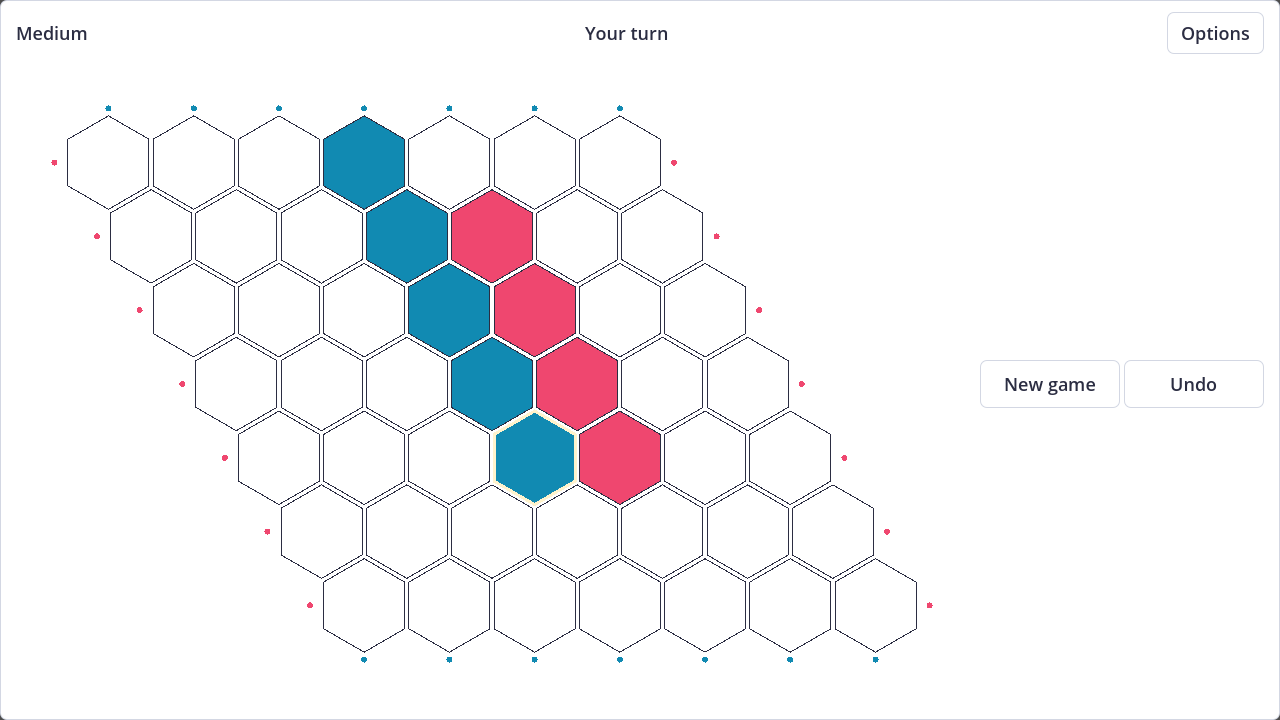
Hex has no secret solution to be unique about: it is two players racing chains across a rhombus. Its difficulty is an opponent, tuned by hand — search depth 1, 2, 3 and 6 per level; a time ceiling of 150, 300, 600 and 1200 milliseconds per move; and a deliberate-blunder probability from 45% on Easy down to exactly 0% on Expert. The search deepens level by level until its time runs out, so high levels get stronger without ever freezing the game.
Winning by rules, not by copying
The last attitude is the quietest: Slitherlink and Kakuro. Slitherlink's generator keeps its own loop around — but the code says plainly that it exists to give hints, that other valid loops may exist, and that winning means actually obeying the rules. Kakuro's win check never compares your grid to the stored solution cell by cell: every run complete, no digit twice in a run, every sum hit. Satisfy that and the win panel lands, generator's answer or not.
Some readers will feel the floor tilt here: isn't the generator's answer the real one? For gameplay, no — any fill that obeys the rules is a correct answer. Proving no second fill exists is the counting work Thermometers buys with its 600 milliseconds, and neither Slitherlink nor Kakuro pays that price. Saying so out loud is the point of this article.
Why the title still fits
The bar this workshop measures itself against is that booklet from Eger, kept by the World Puzzle Federation, which runs the championship every year. The promise, at inventory precision: we chase the unique solution and prove it wherever proving costs a few hundred milliseconds (Thermometers counting on a budget, Sudoku carving only while no second completion shows up). Where proof does not pay for itself, we ship boards that are legal, playable, and won by the rulebook — never a fake guarantee. Difficulty gets its own dials: clue counts, or a tuned opponent.
Next time a board feels too hard, count your clues before you complain. And if you want to watch the two attitudes side by side, Thermometers proves its boards one at a time, while Nurikabe simply refuses to ship a sea in pieces.